
No products in the basket.
Blog
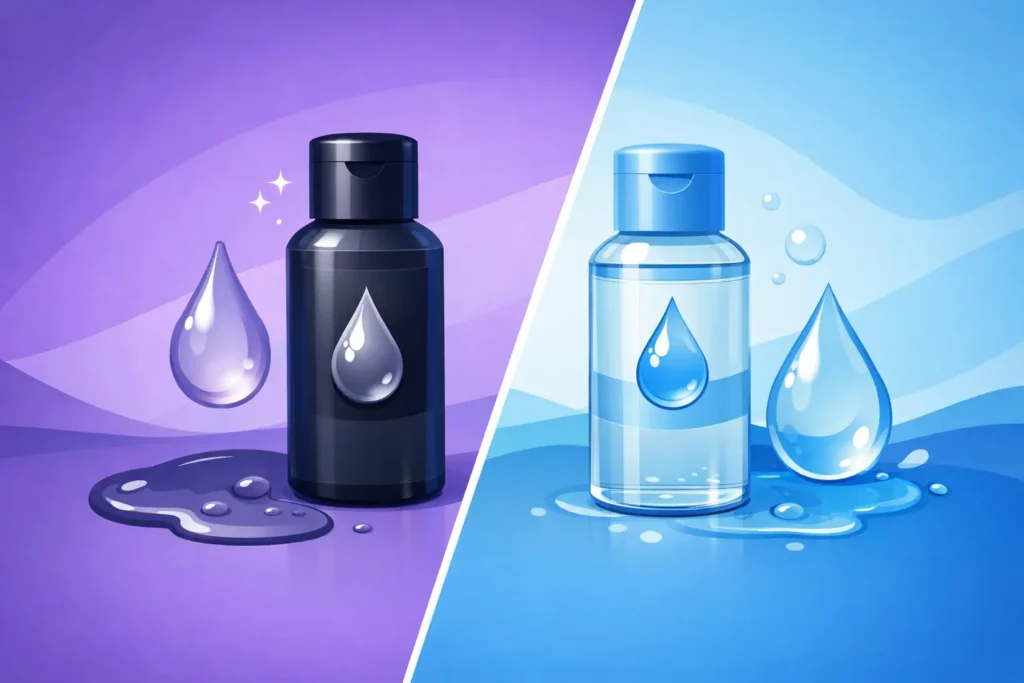
Silicone vs Water Based Personal Lubricants
16
Jul
Jul
A lube that vanishes halfway through is a mood killer. One that leaves your favourite silicone toy looking a bit suspect is worse. The silicone vs water based personal lubricants question comes down to what you’re doing, what you’re using, and how much faff you can tolerate afterwards. There is no one lube to rule them all – but there is absolutely a right one for tonight’s plans.
Silicone vs water based personal lubricants: the quick answer
Water-based lube is the easy-going all-rounder. It is usually simple to wash away, works with every type of sex toy, and is a solid shout for vaginal sex, solo sessions, foreplay and anyone who likes a clean finish. The trade-off is that it can dry out, especially during longer sessions, so you may need to add more.
Silicone lube is the slippery overachiever. It stays slick for much longer, is brilliant in water, and is often the better fit for anal play or any session where stopping to reapply is not on the agenda. It can be harder to wash off and may not play nicely with silicone toys.
That is the nutshell version. The better choice is the one that matches your body, your toys and your plans, not the one somebody online swears by.
Water-based lube: easy, versatile and toy-friendly
Water-based personal lubricants are usually where newcomers should start. Their texture often feels light and natural, they rinse off with water, and they are compatible with latex condoms as well as silicone, glass, metal and plastic toys. If your bedside drawer has a vibrator collection, water-based lube keeps the decision-making beautifully uncomplicated.
It is also the sensible pick when you want a quick clean-up. A damp flannel, warm water or a shower normally does the job, without leaving sheets, hands and every surface within reach feeling coated. For everyday pleasure, oral play and toy sessions, that convenience counts for plenty.
The catch is simple: water evaporates. Friction, body heat and a longer session can mean the lube starts to feel less slippery. Add a little more as needed rather than trying to push through discomfort. Reapplying is not a failure, babes. It is just good technique.
Some water-based formulas include glycerin, flavours, warming ingredients or other extras. These can be great fun for the right person, but sensitive skin can be picky. If you are prone to irritation or recurring thrush, check the ingredients and choose a simpler formula where possible. A patch test on external skin is a sensible little precaution before a big night.
Silicone lube: built for the long game
Silicone-based lube does not dry out in the same way as water-based lube. A small amount can stay slick for ages, making it a popular choice for longer sessions, shower play and anal sex. It is also highly water-resistant, so it will not disappear the moment things get steamy in the bath.
For anal play, that staying power can make a real difference. The anus does not produce its own lubrication, so generous lube and patience are non-negotiable. Silicone lube reduces the need for constant top-ups, though you should still pause, communicate and add more if anything feels tight, scratchy or uncomfortable. More slip, less grimacing.
The downside is clean-up. Silicone lube usually needs soap and warm water rather than a quick rinse, and it can transfer to fabrics. Pop a towel down if you are worried about your sheets. It is a small price for that gloriously lasting glide, but it is worth knowing before you get carried away.
The biggest rule: be careful with silicone toys. Some silicone lubricants can react with silicone toy material, leaving the surface sticky, tacky or damaged. Not every combination causes a problem, but it is not worth gambling with a toy you love. Check the manufacturer’s advice first. If it is not clear, use water-based lube with silicone toys, or test a tiny hidden area and clean it properly afterwards.
Condoms, toys and the details that matter
Both water-based and silicone-based lubricants are generally suitable for use with latex condoms, but read the product label and your condom packaging every time. Formulas vary, and a quick check takes seconds. Oil-based products are the type to keep away from latex condoms, as oil can weaken latex and increase the chance of breakage.
With toys, water-based lube is the safest universal answer. It works across materials and takes the guesswork out of getting your kit ready. Silicone lube is best reserved for non-silicone toys such as glass, stainless steel or certain hard plastic toys, provided the toy maker says it is suitable.
If you are using a condom with a toy, lube the outside of the condom and do not forget to change it between partners or between anal and vaginal play. That small swap helps reduce the transfer of bacteria and keeps the fun from becoming an unwanted aftermath.
Which lube suits your kind of fun?
For a quick solo session with a vibrator, water-based is usually the obvious winner. It is toy-safe, easy to rinse away and does not leave your hands feeling like you have been buttering a baking tray.
For penetrative vaginal sex, either can work. Water-based feels lighter and is easier to clean, while silicone may suit you if dryness is a regular issue or you prefer a longer-lasting glide. If you use silicone toys as part of the action, stick with water-based rather than mixing materials and hoping for the best.
For anal play, many people prefer silicone because it lasts. Water-based can still work brilliantly, especially if you want complete toy compatibility or enjoy a specific anal-focused formula. You will simply want to use plenty and reapply without being shy about it.
For shower or bath play, silicone is the practical choice. Water-based lube washes away quickly under running water, which is deeply unhelpful when you are trying to keep things moving. Silicone stays put far better, but take care with slippery surfaces. Sexy is excellent. Slipping on the tiles is not.
Give your anal play some proper attention
Anal play deserves its own prep, rather than grabbing whatever is nearest and cracking on. Start slowly, use more lube than you think you need, and make communication part of the foreplay. A formula designed with anal pleasure in mind can make shopping less confusing, whether you favour a longer-lasting silicone texture or a water-based option that works with all your toys.
At Aqua Lubes, Anal-Ese Cherry, Dare and Anal Blu are worth putting on your radar when you are building an anal-play basket. Check each product’s label for its base, ingredients and intended use, then match it to your condoms and toys. The name may be cheeky, but the choice should still be deliberate.
If a product contains a desensitising ingredient, do not treat it as permission to ignore your body. Numbness can make it harder to notice discomfort, which is useful information, not something to bulldoze through. Use only as directed, go slowly and stop if anything feels wrong. Pleasure should feel good, not like a challenge you need to win.
How to avoid a lube flop
A little preparation makes a big difference. Keep water-based lube close if you are using silicone toys, and save silicone for those long, wet or anal sessions where staying power is king. If you are trying a new formula, use a small amount first. Bodies can be gloriously individual, and the lube your mate calls life-changing may be a hard pass for your bits.
Pay attention to texture too. Some people love a thin, silky lube; others want a thicker gel that stays where it is put. A thicker formula can be especially handy for external stimulation and anal play, while a lighter one may feel more natural for vaginal sex. There is no medal for choosing the most complicated option. Choose the one that makes you want to reach for it again.
Your best lube is the one that keeps things comfortable, fits your kit and lets you focus on the good bit. Start with water-based for easy, toy-friendly versatility, bring silicone out when you want serious staying power, and keep your chosen bottle within arm’s reach. Future you will be very pleased.
