
No products in the basket.
Blog
How to Clean Vibrators Without Ruining Them
08
Oct
Oct
The post-orgasm glow is lovely. Finding last week’s lube on your favourite toy? Less so. Knowing how to clean vibrators properly keeps play more comfortable, helps your toy last longer and means it is ready when the mood strikes – not when you have time for a deep clean.
The good news: this is not a faff. Most vibrators need a quick wash after every use, a proper dry and sensible storage. The part that changes the method is the toy’s material, whether it is waterproof and whether it has fiddly electrical bits. Start there, rather than giving every toy the same soap-and-water treatment.
How to clean vibrators safely after every use
First, switch the vibrator off. If it has a removable battery, take it out before cleaning. Unplug rechargeable toys from their cable too. A toy can be waterproof for use in the bath yet still hate having its charging point soaked, so do not make assumptions based on vibes alone.
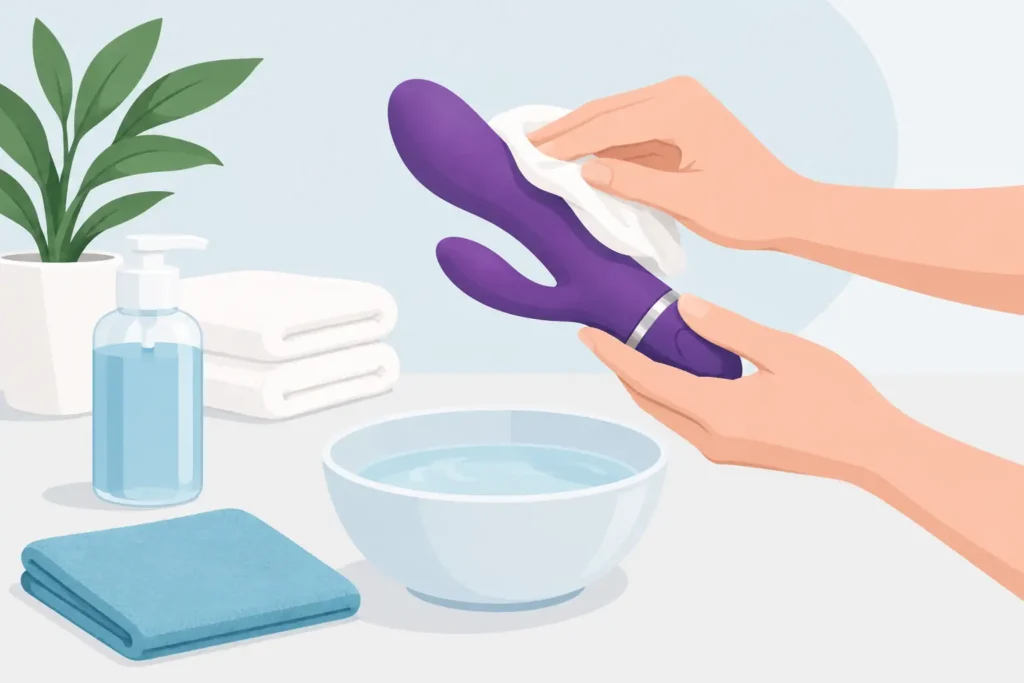
Use warm water and a small amount of mild, fragrance-free soap on non-porous, fully waterproof toys. Clean all surfaces, paying attention to grooves, buttons, seams and the base. Rinse away every trace of soap, then pat it dry with a clean lint-free towel and leave it to air-dry fully before putting it away.
That last bit matters. Trapping dampness in a drawer, pouch or box can leave a toy smelling a bit grim, and moisture near a charging port is asking for trouble. Give it time to dry properly, especially around textured details.
For non-waterproof vibrators, clean the outside with a damp cloth and mild soap rather than holding the whole thing under the tap. Keep water away from battery compartments, charging contacts and any opening where water could sneak inside. A slightly damp cloth is enough – no need to turn your bedside table into a car wash.
Check the material before you wash
A vibrator’s material tells you how assertive you can be with cleaning. If you still have the packaging or instructions, check them. Manufacturers know their motors, coatings and seals better than anyone.
Silicone, glass, stainless steel and ABS plastic
These are generally non-porous materials, which makes them straightforward to care for. Warm water and mild soap will usually do the job. Glass and stainless steel toys without electronic components can sometimes tolerate more intensive cleaning, but never boil a toy with a motor, battery, bonded decoration or an unknown coating.
Silicone vibrators are popular for a reason: they feel lush, are body-safe when made from quality silicone and are easy to wash. Still, do not reach for harsh chemicals. Bleach, alcohol-heavy sprays, acetone, strong antibacterial cleaners and perfumed hand wash can damage surfaces or leave irritating residue.
ABS plastic is common on bullet vibrators and wand handles. Wipe it down carefully, particularly if it is not waterproof. Do not scrub printed symbols or seams like you are removing graffiti from a bus stop.
Jelly, rubber, PVC and other softer materials
Older or budget-friendly toys may be porous, meaning tiny surface gaps can hold on to bacteria and product residue more easily. Clean them gently with warm water and mild soap, dry them thoroughly and consider using a condom over the toy for easier hygiene – especially if sharing it, using it for anal play or switching between body areas.
If a porous toy stays tacky, develops cracks, changes colour dramatically or keeps a smell after cleaning, it is probably time to retire it. No vibrator deserves a heroic final tour when the material is breaking down.
Toy cleaner: useful, but not magic
A dedicated sex-toy cleaner can be handy for a fast freshen-up, particularly when you cannot get to a sink straight away. It is not a replacement for washing when a toy has visible lube or bodily fluids on it. Think of it as a convenient part of your routine, not a glittery force field against every germ on Earth.
Choose a cleaner made for intimate toys and follow its label. Avoid household disinfectants, surface wipes and scented bathroom products. “Smells like tropical rain” is not a requirement for your bits, and fragrance can be irritating on sensitive skin.
If you are sharing a vibrator with a partner, wash it between users. If it moves from anal play to vaginal or front-hole play, clean it before changing areas or use a fresh condom. This is one of those sexy grown-up habits that prevents a much less sexy case of irritation or infection.
Lube residue is where most cleaning goes wrong
Lube makes play smoother, but it can also cling to textures, seams and charging areas if you let it sit. Clean your vibrator soon after use rather than leaving it on the bedside table until tomorrow’s version of you has to deal with it.
Water-based lube is usually the easiest to wash away with warm water. It is a solid match for most vibrator materials and for anyone who wants low-drama clean-up. Silicone-based lube tends to last longer, which can be brilliant for extended sessions, but it may not suit every silicone toy. Some silicone-on-silicone combinations can affect a toy’s finish, depending on the formula and material quality. Check the maker’s care guidance or do a tiny patch test on an inconspicuous area first.
For anal play, use plenty of lube and be even more particular about cleaning afterwards. Anal-Ese Cherry, Dare and Anal Blu are the sort of pleasure-drawer staples worth keeping alongside your toy cleaner and condoms. Pick a formula that suits your toy material and your plans, then wash the toy promptly once play is done. A little preparation makes for a much happier encore.
Do not forget the awkward bits
The main body gets all the attention, but the small areas are where residue likes to loiter. Use a soft cloth, cotton bud or soft-bristled toothbrush reserved only for toy cleaning to gently reach around raised buttons, ridges and detailed textures. Do not poke aggressively into charging sockets or use anything sharp.
For toys with removable sleeves, attachments or suction bases, take apart only the pieces the manufacturer says are removable. Wash those parts separately, rinse well and let them dry before reassembling. For rabbit vibrators, strokers and toys with lots of texture, slow and careful beats a rushed rinse every time.
Store it like you rate it
Once dry, keep your vibrator in a clean pouch, box or separate compartment. Do not toss silicone toys loose against each other for months, as some materials can react or leave marks when stored in constant contact. Keeping each toy in its own fabric bag is a simple fix.
Avoid humid bathrooms, direct sunlight and radiators. Heat can affect batteries and materials, while damp storage encourages unwanted funk. If you use rechargeable toys, charge them according to the instructions rather than leaving them permanently plugged in. Your toy is here for a good time and, with decent care, a long time too.
When should you replace a vibrator?
Cleaning extends a toy’s life, but it cannot fix everything. Replace a vibrator if the coating peels, the silicone splits, the battery swells, the charging port corrodes, the motor behaves oddly or water appears to have got inside. Stop using it if it causes discomfort, a rash or an unusual smell that remains after washing.
A well-kept vibrator should feel clean, smooth and reassuringly boring between the exciting bits. Make washing it part of your aftercare ritual: rinse, dry, store, relax. Future you will be very pleased you did.
