
No products in the basket.
Blog
Silicone Lubricant Versus Hybrid Lubricant
21
Nov
A lube that starts out dreamy and turns sticky halfway through is a proper mood killer. When it comes to silicone lubricant versus hybrid lubricant, the right pick comes down to what you are doing, which toys are joining in, and how much slipperiness you want without constantly reaching for another squeeze.
Both can feel wonderfully smooth, both usually last longer than basic water-based lube, and both have a place in a well-stocked bedside drawer. But they are not interchangeable. Get the details right and your play feels better, your clean-up makes more sense, and your favourite toy does not get an unexpected chemistry experiment.
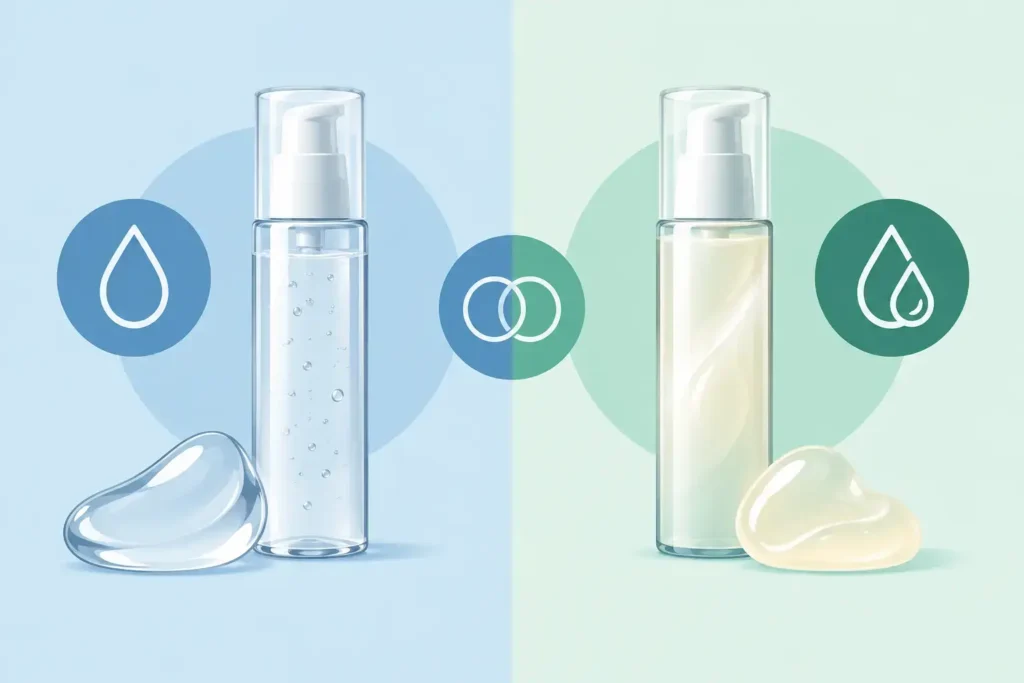
Silicone lubricant versus hybrid lubricant: the main difference
Silicone lubricant is generally made with silicone-based ingredients and no water. It sits on the skin rather than soaking in quickly, creating serious, long-lasting glide. A little can go a long way, which is exactly why silicone is a popular choice for shower fun, longer sessions, massage and anal play.
Hybrid lubricant blends water-based and silicone-based ingredients. Think of it as the middle ground: it has more staying power and silkiness than many water-based formulas, while often feeling lighter and easier to wash away than a full silicone lube. It can be a cracking choice when you want extra glide but do not fancy the ultra-slick, ultra-persistent feel of silicone.
The catch? A hybrid is not simply a silicone lube with a splash of water. Formulas vary wildly. One hybrid may be mostly water with a touch of silicone, while another may deliver a much richer, more silicone-like finish. Read the bottle, not just the category name.
When silicone lube earns its place
Silicone lube is the heavyweight when friction needs taking seriously. It does not dry out quickly, so there is less interruption and less need to reapply. For anal play in particular, that lasting cushion can be a very welcome thing.
It is also water-resistant. That makes it the obvious naughty companion for a bath, shower or any wet-and-wild scenario where water-based lube may wash off before the fun gets going. For massage, it brings a slippery, silky glide that works nicely for slow, sensual contact.
The trade-off is clean-up. Silicone can feel gloriously slick, but it does not rinse away with water alone. Soap and a proper wash usually do the job. It may also leave a temporary slippery spot on bedding or skin, so keep that in mind if you like a quick get-dressed-and-go finish.
Silicone lubes are generally compatible with latex condoms. Still, condoms, lubes and bodies all deserve a quick label check, especially if a product contains added warming, flavoured or numbing ingredients. Your packaging is the boss here.
When a hybrid lube is the better shout
Hybrid lube suits people who want the best bits of both camps: a smooth, longer-lasting glide without the full-on persistence of silicone. It is a solid everyday option for couples who find water-based lubes need topping up too frequently but do not love the heavier residue of pure silicone.
It can also be handy when you want a formula that feels more familiar on the skin. Many people describe hybrids as plush, silky and less tacky than water-based lube. That makes them a tempting option for vaginal sex, external play and masturbation, although comfort is personal and there is no universal winner.
Clean-up is usually easier than with silicone lube, but do not expect every hybrid to vanish with a splash of water. The more silicone-forward the formula, the more likely you will want soap afterwards.
For condoms, hybrids are often a good match with latex, but once again, check the manufacturer guidance. “Hybrid” tells you something about the lube base, not every ingredient in the bottle.
The big toy question: silicone on silicone
This is where the comparison gets properly useful. Pure silicone lubricant can react with some silicone toys, leaving the surface tacky, dull or damaged. It does not happen with every toy or every formula, but it is common enough that you should not gamble with a toy you love.
Hybrid lubes may carry a similar risk because they contain silicone ingredients. Some are toy-friendly, some are not, and some brands only approve them for specific toy materials. If you are using a silicone dildo, vibrator, plug or sleeve, follow the toy maker’s care guidance first. If there is any doubt, use a water-based lube or patch-test a tiny, hidden area and leave it for a while before full use.
Glass, metal and hard plastic toys are generally less troublesome with silicone and hybrid formulas, but checking care instructions is still the sensible move. Your toy collection deserves better than blind optimism.
Choosing lube for anal play
For anal play, generous lubrication is not optional. The anus does not self-lubricate in the way a vagina can, so a thicker, longer-lasting formula can make a big difference to comfort. Silicone lube is often the obvious pick for extended play because it stays put. A quality hybrid can be brilliant too if you want something easier to wash away or prefer a lighter feel.
If you are adding an anal desensitising product, slow down rather than treating numbness as a green light to push harder. Reduced sensation can make it harder to notice discomfort, so start small, use plenty of lube, communicate clearly and stop if something feels wrong once the effect wears off.
For shoppers who like their anal essentials with a bit more personality, Anal-Ese Cherry, Dare and Anal Blu are worth considering according to the specific sensation and directions on each pack. Cherry brings the cheeky flavour-led energy; Dare and Anal Blu give you other options when you want to switch up the drawer. Use them exactly as directed, particularly where a product is designed to desensitise.
Feel, ingredients and sensitive skin
The slipperiest lube is not automatically the best lube for your body. Fragrance, flavouring, warming agents, preservatives and botanical extras can all be lovely for some people and irritating for others. If you know you are prone to sensitivity, choose a simpler formula and patch-test externally first.
Avoid using a lube that stings, burns or causes ongoing itching. Wash it off, stop using it and give your skin time to settle. Persistent symptoms are a reason to speak with a pharmacist or healthcare professional, not to power through for the sake of a sexy plan.
If you are trying to conceive, bear in mind that not every personal lubricant is designed to be sperm-friendly. That is a separate product question, so look for a formula specifically labelled for that purpose rather than assuming silicone or hybrid is the answer.
A quick way to make the call
Choose silicone when maximum staying power matters, especially for shower play, massage or longer anal sessions. Choose a hybrid when you want smoother, longer glide than water-based lube but a less heavy finish and potentially easier washing afterwards.
If silicone toys are involved, pause before adding either one to basket. Water-based lube is usually the safer default for silicone toy surfaces unless the manufacturer clearly says otherwise. And if your plan includes condoms, check both packages rather than relying on a broad rule.
There is no prize for owning only one type of lube. Keep a silicone or hybrid formula for the sessions that need extra slip, keep a toy-safe water-based option nearby, and let the night decide what deserves the first squeeze.
